About Me
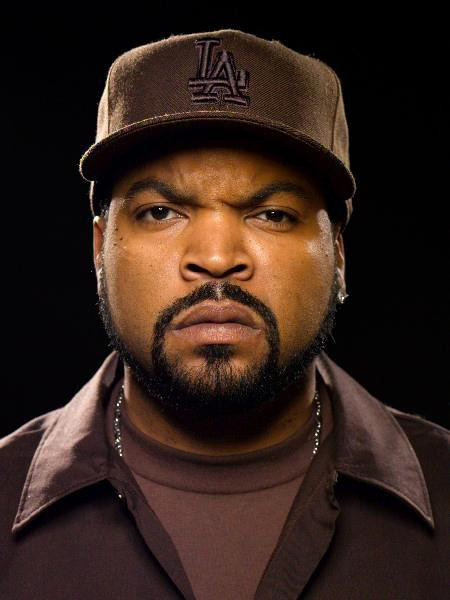
O’Shea Jackson, popularly known by his stage name Ice Cube is an American rapper, songwriter, actor and filmmaker. He first burst onto the scene as part of the pioneering hip-hop group N.W.A, then went on to achieve massive success as a solo artist, a musician whose lyrical style was compelling and whose sound was quintessentially West Coast. Ice Cube is not only a rapper and singer but he managed to establish himself as a great actor, writer and producer. His creative genius, his self-confidence and his cultural impact have been a major inspiration to many generations.
Ice Cube | Biography, Albums, Songs & Movies
O’Shea Jackson, professionally known as Ice Cube, is an American rapper, songwriter, actor, screenwriter, producer, and entrepreneur. Born on June 15, 1969, in Los Angeles, California, he became one of the most influential figures in West Coast hip-hop before developing an equally recognizable career in film and television.
Ice Cube first achieved widespread recognition as a principal rapper and songwriter for N.W.A. His forceful delivery, vivid storytelling, political commentary, and direct observations about urban life helped define the group’s identity. After leaving N.W.A., he established a successful solo career with albums including AmeriKKKa’s Most Wanted, Death Certificate, The Predator, and Lethal Injection.
His entertainment career later expanded into acting, screenwriting, directing, and film production. From the dramatic impact of Boyz n the Hood to the humor of Friday, Barbershop, 21 Jump Street, and Ride Along, Ice Cube demonstrated an unusual ability to move between serious music, social commentary, action films, and mainstream comedy.
Early Life and Musical Beginnings
Ice Cube grew up in South Central Los Angeles. He began writing rhymes while attending high school and became involved with the developing Los Angeles hip-hop scene during his teenage years. Before becoming internationally famous, he performed with groups including Stereo Crew and C.I.A., working with musicians such as Sir Jinx and Dr. Dre.
He briefly studied architectural drafting at the Phoenix Institute of Technology in Arizona. The discipline associated with design and structure would later appear in his careful approach to songwriting, business, and filmmaking. After completing the program, he returned to Los Angeles and concentrated on music.
Ice Cube’s early songwriting ability immediately distinguished him. He wrote “Boyz-n-the-Hood,” which was recorded by Eazy-E and became an important early recording for Ruthless Records. His combination of street-level storytelling, humor, anger, and detailed observation provided a foundation for the emerging sound of West Coast gangsta rap.
Ice Cube and N.W.A.
Ice Cube joined Eazy-E, Dr. Dre, DJ Yella, Arabian Prince, and MC Ren in N.W.A. The group’s 1988 album Straight Outta Compton became one of the most significant releases in hip-hop history.
Ice Cube contributed lyrics and performances to songs including “Straight Outta Compton,” “Gangsta Gangsta,” and “Fuck tha Police.” These recordings presented uncompromising descriptions of policing, racism, poverty, violence, and daily life in Los Angeles. The group attracted enormous attention and controversy, but its music also gave a national audience to experiences that mainstream American entertainment often ignored.
Despite N.W.A.’s success, Ice Cube became dissatisfied with the group’s financial arrangements and management. He left in late 1989 and began developing his solo career. Although the separation produced a highly publicized conflict, it allowed him to establish full control over his creative direction.
N.W.A.’s historical importance continued to grow after the group ended. In 2016, the group was inducted into the Rock and Roll Hall of Fame, confirming its lasting influence on music and popular culture.
AmeriKKKa’s Most Wanted
Ice Cube released his debut solo album, AmeriKKKa’s Most Wanted, on May 16, 1990. Recorded with the Bomb Squad—the production team closely associated with Public Enemy—the album combined dense East Coast production with Ice Cube’s West Coast perspective.
Songs such as “The Nigga Ya Love to Hate,” “AmeriKKKa’s Most Wanted,” “Endangered Species,” and “Who’s the Mack?” established him as an independent creative force. The album addressed racism, economic inequality, crime, media stereotypes, relationships, and the pressures surrounding young Black communities.
The lyrics were frequently confrontational and controversial, but Ice Cube’s writing displayed narrative skill, dark humor, character development, and political urgency. Later in 1990, he released the Kill at Will EP, featuring “Jackin’ for Beats” and “Dead Homiez.”
Death Certificate
Released on October 29, 1991, Death Certificate was divided conceptually into a “Death Side” and a “Life Side.” The first represented social decline and destruction, while the second focused more strongly on awareness, knowledge, and possible renewal.
The album included “Steady Mobbin’,” “True to the Game,” “My Summer Vacation,” “A Bird in the Hand,” “Alive on Arrival,” and “No Vaseline.” The final track was a particularly aggressive response to Ice Cube’s former N.W.A. colleagues and their manager.
Death Certificate remains one of his most discussed releases. Its social criticism and storytelling were widely praised, while several lyrics were criticized for offensive stereotypes and inflammatory language. That tension—between powerful political observation and deliberate provocation—has remained central to discussions of the album.
The Predator and Mainstream Success
Ice Cube released The Predator on November 17, 1992, following a period of intense social conflict in Los Angeles. The album directly addressed anger, policing, media narratives, and the conditions surrounding the 1992 Los Angeles unrest.
It produced several of his most famous songs. “Wicked” delivered aggressive political energy, while “Check Yo Self” became a major crossover success through its remix using elements of Grandmaster Flash and the Furious Five’s “The Message.”
“It Was a Good Day” offered a different perspective. Instead of concentrating entirely on conflict, the song describes an unusually peaceful and enjoyable day in South Central Los Angeles. Its relaxed production, memorable details, and understated performance made it one of the most recognizable songs in hip-hop.
Lethal Injection and West Coast Sound
Released in December 1993, Lethal Injection moved further toward the smoother G-funk sound that dominated West Coast rap during the decade. Tracks including “You Know How We Do It,” “Bop Gun (One Nation),” “Really Doe,” and “What Can I Do?” combined funk samples, relaxed grooves, and Ice Cube’s commanding delivery.
“You Know How We Do It” became especially popular for its laid-back production and vivid representation of Los Angeles. Although the album sounded smoother than his earliest solo recordings, Ice Cube continued writing about power, street life, identity, and social conflict.
Westside Connection
In the mid-1990s, Ice Cube joined WC and Mack 10 to form Westside Connection. Their 1996 debut, Bow Down, was a forceful celebration of West Coast hip-hop during a period of regional competition within the genre.
The title track became the group’s signature song. Ice Cube balanced his Westside Connection work with acting and solo music. The group later released Terrorist Threats in 2003, which included the popular song “Gangsta Nation,” featuring Nate Dogg.
Later Albums and Musical Independence
Ice Cube released War & Peace Vol. 1 (The War Disc) in 1998 and War & Peace Vol. 2 (The Peace Disc) in 2000. The second volume included “You Can Do It,” featuring Mack 10 and Ms. Toi. The song became one of his most enduring party records.
After spending more time on films, Ice Cube returned with Laugh Now, Cry Later in 2006. Released through his own Lench Mob label, the album demonstrated his ability to operate independently. It included “Why We Thugs,” “Go to Church,” and the title track.
Raw Footage followed in 2008, featuring “Gangsta Rap Made Me Do It” and “Do Ya Thang.” In 2010, he released I Am the West, a project asserting his place within the history and continuing development of West Coast hip-hop.
After another extended break, Everythang’s Corrupt arrived in 2018. Its songs returned to political criticism, institutional distrust, media manipulation, and cultural conflict.
Man Down and Man Up
Ice Cube released Man Down on November 22, 2024. His first solo studio album in six years, the 19-track record featured “It’s My Ego,” “So Sensitive,” “Rollin’ at Twilight,” and collaborations with Snoop Dogg, E-40, Too Short, October London, B-Real, Kurupt, and Xzibit.
He followed it with his twelfth solo studio album, Man Up, on September 12, 2025. The project focuses on responsibility, resilience, cultural history, and personal accountability. Its tracks include “Before Hip Hop,” “Act My Age” featuring Scarface, “California Dreamin,” and “It’s My Ego 3Mix.”
These releases demonstrate that Ice Cube’s musical career remains active more than three decades after his solo debut.
Ice Cube Studio Albums
|
Album |
Release year |
|---|---|
|
AmeriKKKa’s Most Wanted |
1990 |
|
Death Certificate |
1991 |
|
The Predator |
1992 |
|
Lethal Injection |
1993 |
|
War & Peace Vol. 1 (The War Disc) |
1998 |
|
War & Peace Vol. 2 (The Peace Disc) |
2000 |
|
Laugh Now, Cry Later |
2006 |
|
Raw Footage |
2008 |
|
I Am the West |
2010 |
|
Everythang’s Corrupt |
2018 |
|
Man Down |
2024 |
|
Man Up |
2025 |
Release dates for Ice Cube’s principal catalogue are documented through his official discography.
Most Popular Ice Cube Songs
Ice Cube’s catalogue contains political records, storytelling songs, diss tracks, club music, reflective tracks, and West Coast anthems. Some of his most important and recognizable songs include:
- “It Was a Good Day”
- “Check Yo Self”
- “You Know How We Do It”
- “No Vaseline”
- “Steady Mobbin’”
- “AmeriKKKa’s Most Wanted”
- “Wicked”
- “Bop Gun (One Nation)”
- “The Nigga Ya Love to Hate”
- “Jackin’ for Beats”
- “What Can I Do?”
- “You Can Do It”
- “Why We Thugs”
- “Gangsta Rap Made Me Do It”
- “It’s My Ego”
- “Before Hip Hop”
His work with N.W.A. also includes landmark performances on “Straight Outta Compton,” “Gangsta Gangsta,” and “Fuck tha Police.” With Westside Connection, “Bow Down” and “Gangsta Nation” became defining songs.
Acting Debut in Boyz n the Hood
Ice Cube made his major acting debut as Doughboy in John Singleton’s 1991 film Boyz n the Hood. His performance was praised for its authenticity and emotional strength, particularly because he had little formal acting experience.
The film examines friendship, family, violence, and limited opportunities in South Central Los Angeles. Doughboy became one of Ice Cube’s most memorable roles and demonstrated that his screen presence could extend beyond music.
He later appeared in Trespass and Higher Learning, gradually developing a film career that included drama, action, comedy, family entertainment, writing, directing, and production.
The Friday Franchise
Ice Cube co-wrote and starred in Friday, released in 1995. Playing Craig Jones opposite Chris Tucker’s Smokey, he helped create a neighborhood comedy that presented South Central Los Angeles with humor, warmth, and recognizable everyday characters.
Unlike films that focused almost exclusively on violence, Friday showed friends, families, arguments, romance, local personalities, and community life. The movie became a cult classic and produced two sequels: Next Friday in 2000 and Friday After Next in 2002.
Ice Cube’s work on Friday was important because it established him as more than an actor. He was also a screenwriter and producer capable of developing successful film properties.
Directing and Film Production
In 1998, Ice Cube made his feature-film directorial debut with The Players Club. He also wrote, produced, and appeared in the movie. The project demonstrated his growing control behind the camera.
Through CubeVision, his film and television production company, he continued building projects centered on comedy, action, music, family relationships, and Black American life. This business structure allowed him to participate in projects as an actor, writer, producer, and creative decision-maker.
He was also a producer of Straight Outta Compton, the successful 2015 biographical drama about N.W.A. His son, O’Shea Jackson Jr., portrayed him in the film.
Barbershop, Are We There Yet? and Mainstream Comedy
Ice Cube starred as Calvin Palmer Jr. in Barbershop in 2002. The comedy used a neighborhood barbershop to explore community, business, relationships, and local debate. He returned for Barbershop 2: Back in Business and Barbershop: The Next Cut.
He entered family comedy with Are We There Yet? in 2005, playing Nick Persons, a bachelor attempting to impress a woman by traveling with her children. The movie was followed by Are We Done Yet? in 2007 and inspired a television adaptation.
These roles introduced Ice Cube to audiences who may not have known his early music. His famously serious expression became an effective comedic tool, particularly when placed against chaotic characters and ridiculous situations.
21 Jump Street and Ride Along
In 21 Jump Street and 22 Jump Street, Ice Cube played the loud and intimidating Captain Dickson. The role humorously referenced his established public image and allowed him to deliver some of the films’ most memorable scenes.
He also starred opposite Kevin Hart in Ride Along and Ride Along 2. Their contrasting screen personalities created the central comedy: Ice Cube played the tough, suspicious police officer, while Hart portrayed an energetic and talkative aspiring officer.
Other notable films include Anaconda, Three Kings, Ghosts of Mars, All About the Benjamins, XXX: State of the Union, The Longshots, The Book of Life, and Fist Fight. His official website maintains a broader Ice Cube filmography.
Major Ice Cube Movies
- Boyz n the Hood — 1991
- Trespass — 1992
- Higher Learning — 1995
- Friday — 1995
- Anaconda — 1997
- The Players Club — 1998
- Three Kings — 1999
- Next Friday — 2000
- Ghosts of Mars — 2001
- All About the Benjamins — 2002
- Barbershop — 2002
- Friday After Next — 2002
- Barbershop 2: Back in Business — 2004
- Are We There Yet? — 2005
- XXX: State of the Union — 2005
- Are We Done Yet? — 2007
- The Longshots — 2008
- 21 Jump Street — 2012
- Ride Along — 2014
- 22 Jump Street — 2014
- The Book of Life — 2014
- Straight Outta Compton — 2015, producer
- Ride Along 2 — 2016
- Barbershop: The Next Cut — 2016
- Fist Fight — 2017
- XXX: Return of Xander Cage — 2017
Musical Style and Influence
Ice Cube’s music is distinguished by a commanding voice, precise rhythm, cinematic storytelling, dark humor, and direct social commentary. His lyrics have addressed policing, racism, economic inequality, political hypocrisy, media narratives, street violence, family, celebrity, masculinity, and personal responsibility.
His influence extends beyond gangsta rap. He helped establish Los Angeles as a major center of hip-hop, created templates for politically confrontational rap, and demonstrated that an artist could move from controversial music into mainstream entertainment without abandoning an established identity.
Later generations of rappers have adopted aspects of his vocal intensity, narrative structure, regional pride, independence, and willingness to criticize powerful institutions.
Legacy
Ice Cube’s career represents one of the most significant transformations in modern entertainment. He developed from a teenage Los Angeles songwriter into a member of N.W.A., became a successful solo artist, entered acting without formal experience, and eventually established himself as a screenwriter, director, producer, and entrepreneur.
His earliest records remain important documents of late-1980s and early-1990s Los Angeles. Albums such as AmeriKKKa’s Most Wanted, Death Certificate, and The Predator helped expand the creative and political possibilities of hip-hop. Songs such as “It Was a Good Day,” “Check Yo Self,” and “You Know How We Do It” continue to reach new listeners.
At the same time, films including Boyz n the Hood, Friday, Barbershop, 21 Jump Street, and Ride Along made him recognizable far beyond the music industry. His ability to create serious social art, confrontational rap, neighborhood comedy, action entertainment, and family films has given his career unusual range.
With Man Down in 2024 and Man Up in 2025, Ice Cube continued recording more than 35 years after beginning his solo career. His longevity reflects creative independence, business awareness, and an ability to connect with several generations. Whether remembered as a pioneering rapper, commanding actor, successful filmmaker, or cultural entrepreneur, Ice Cube remains one of the most influential figures in American popular culture.